Launch offer — valid today only

📄 Digital book in PDF · read it on your phone or print it

The South African PPL Theory in Drawings One Topic per Page, So You Can Picture It in the Exam Room

Airspace, the stall, carburettor icing, density altitude, mass and balance, the METAR, the wind triangle, compass errors and radio calls. Every topic has its own page: the drawing first, then what you need to remember. 66 illustrated pages.

GET PPL THEORY ILLUSTRATED

🔒 Secure checkout · PDF by email · 30-day guarantee

Every topic, its own pageEach rule and calculation drawn, with the explanation alongside
66 illustrated pages9 parts, from Air Law to the exam review
Up-to-date sourcesSouth African CARs, the SA AIP and ICAO Annexes
PDF by emailFormat

Look Inside the Book

Every page has one big drawing and a box with the numbers, rules and steps you need to know:

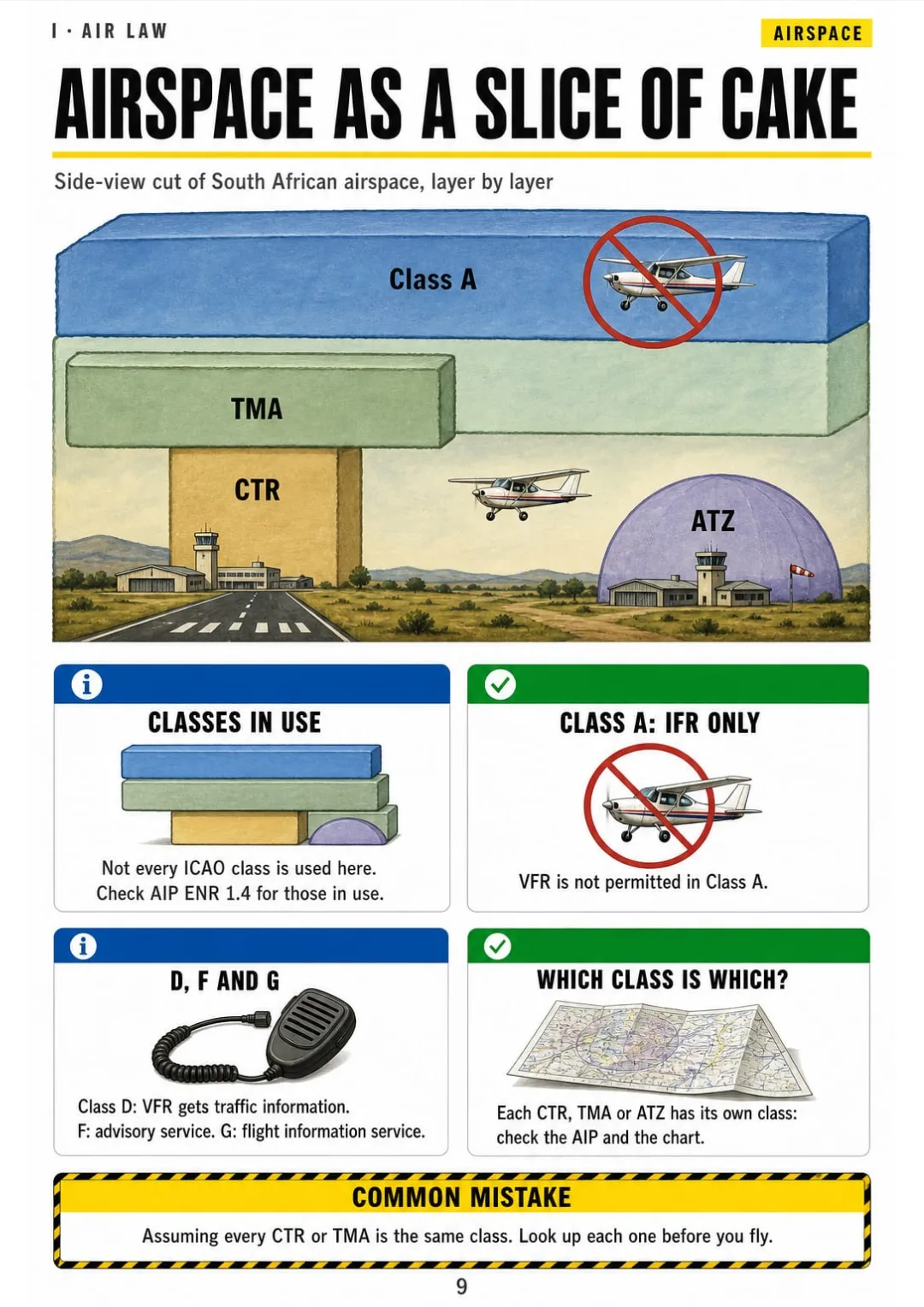
South African classes A, B, C, D, F and G; Class E listed but not in use.
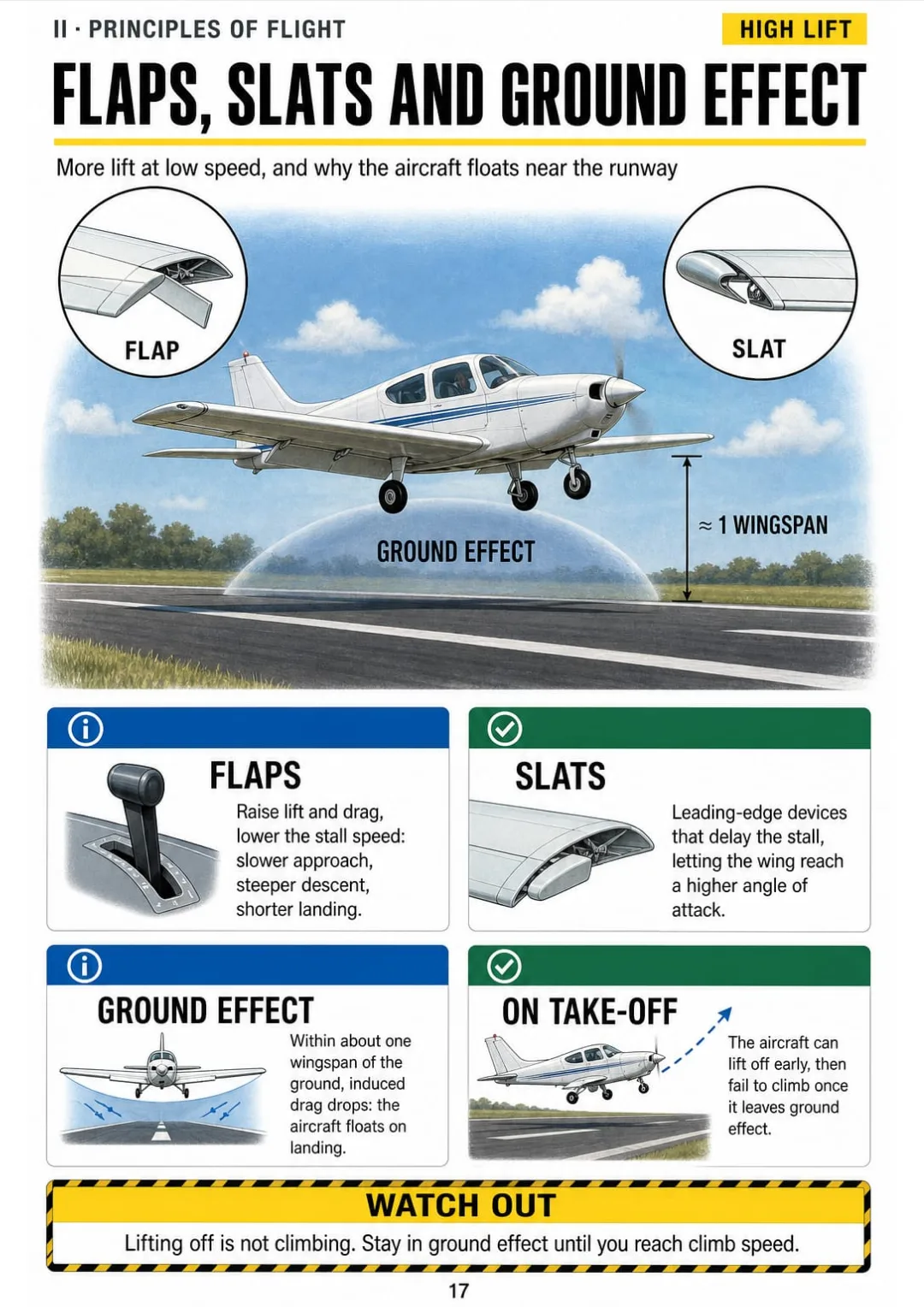
Within about one wingspan of the runway, induced drag drops and the aircraft floats
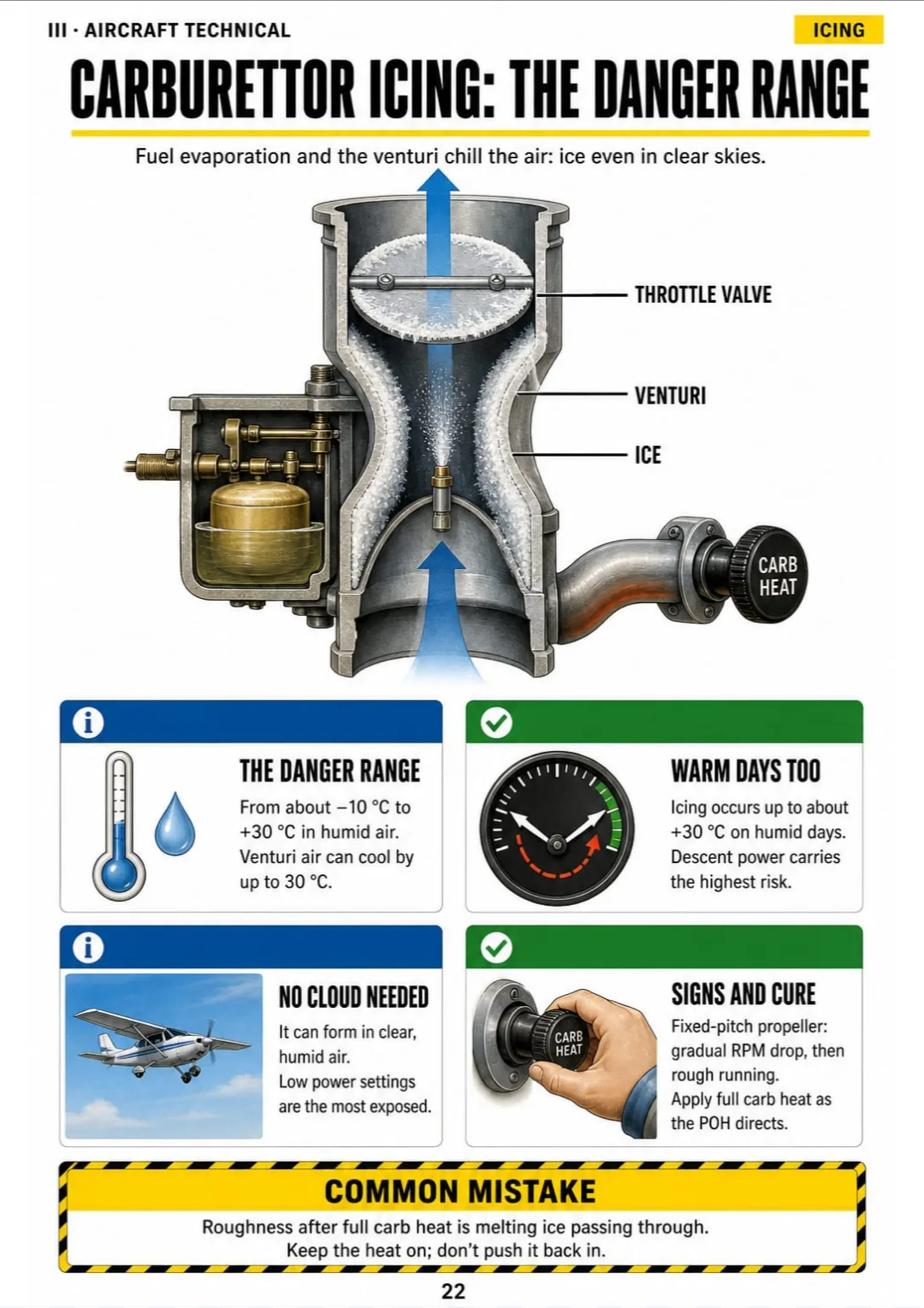
Carb icing: expect it from about −10 °C to +30 °C with high humidity, worst at low power.
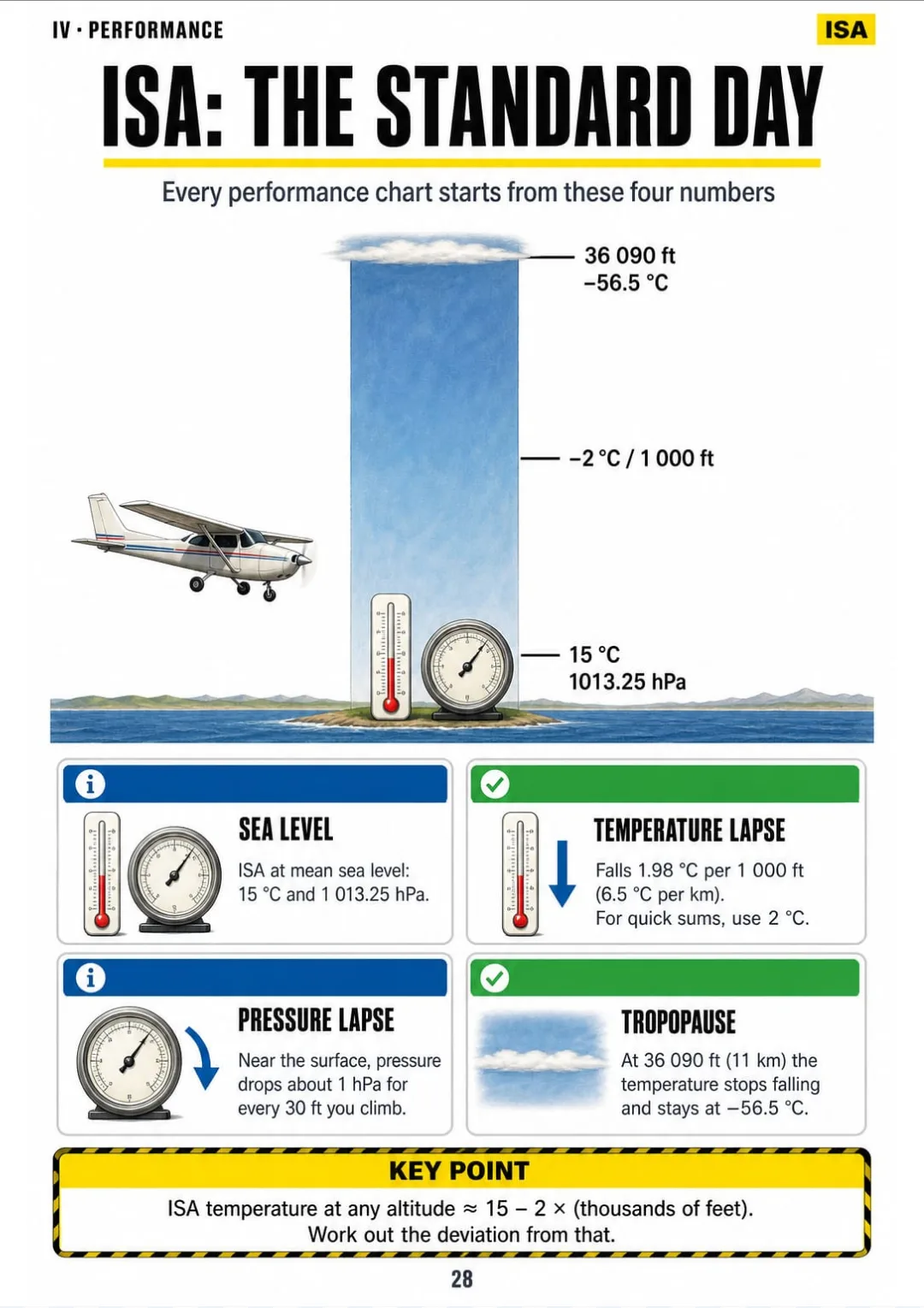
ISA: 15 °C, 1 013.25 hPa, −2 °C per 1 000 ft, about 1 hPa per 30 ft.
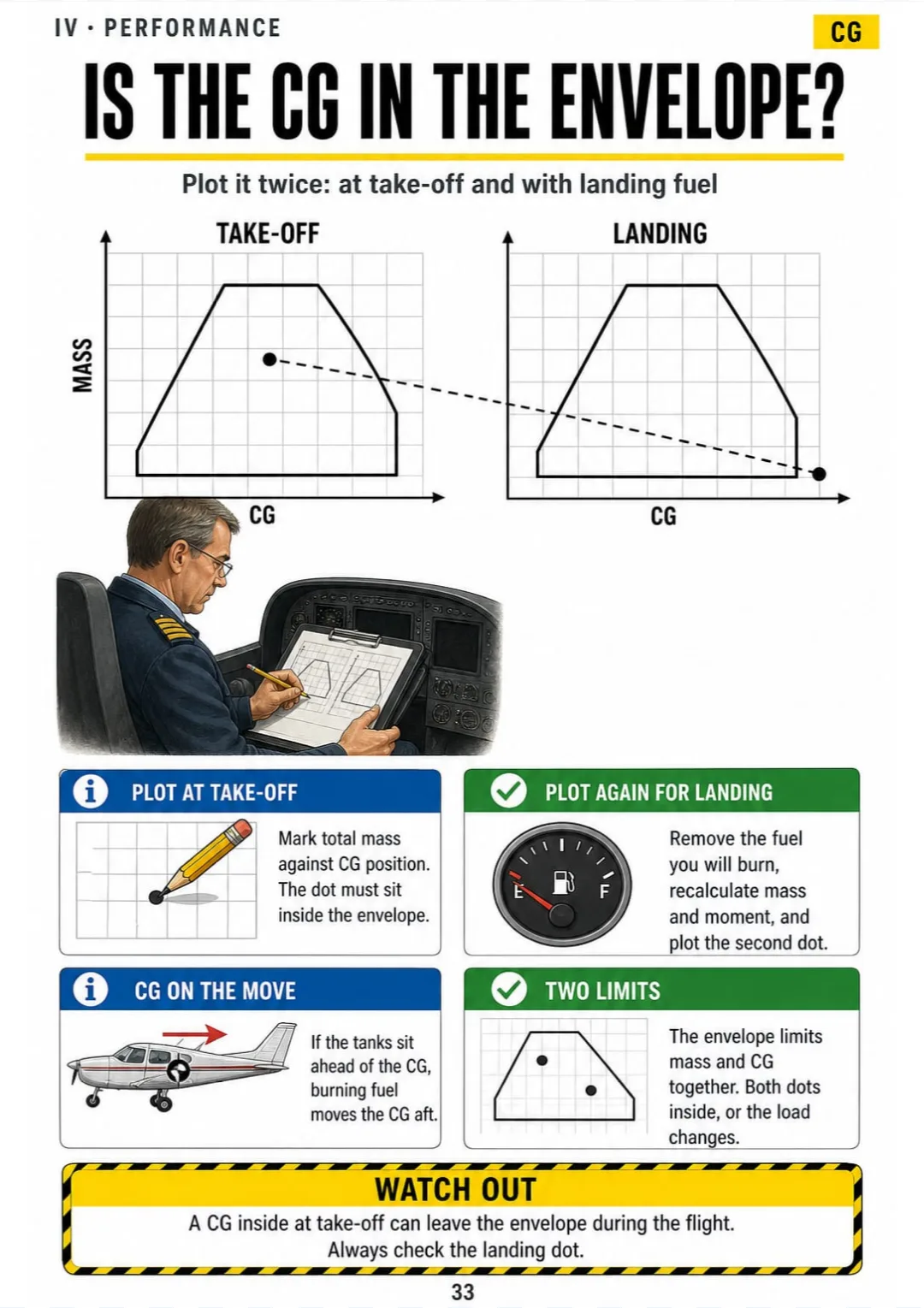
Two dots on the envelope: take-off and landing fuel. Burning fuel can push the CG out.
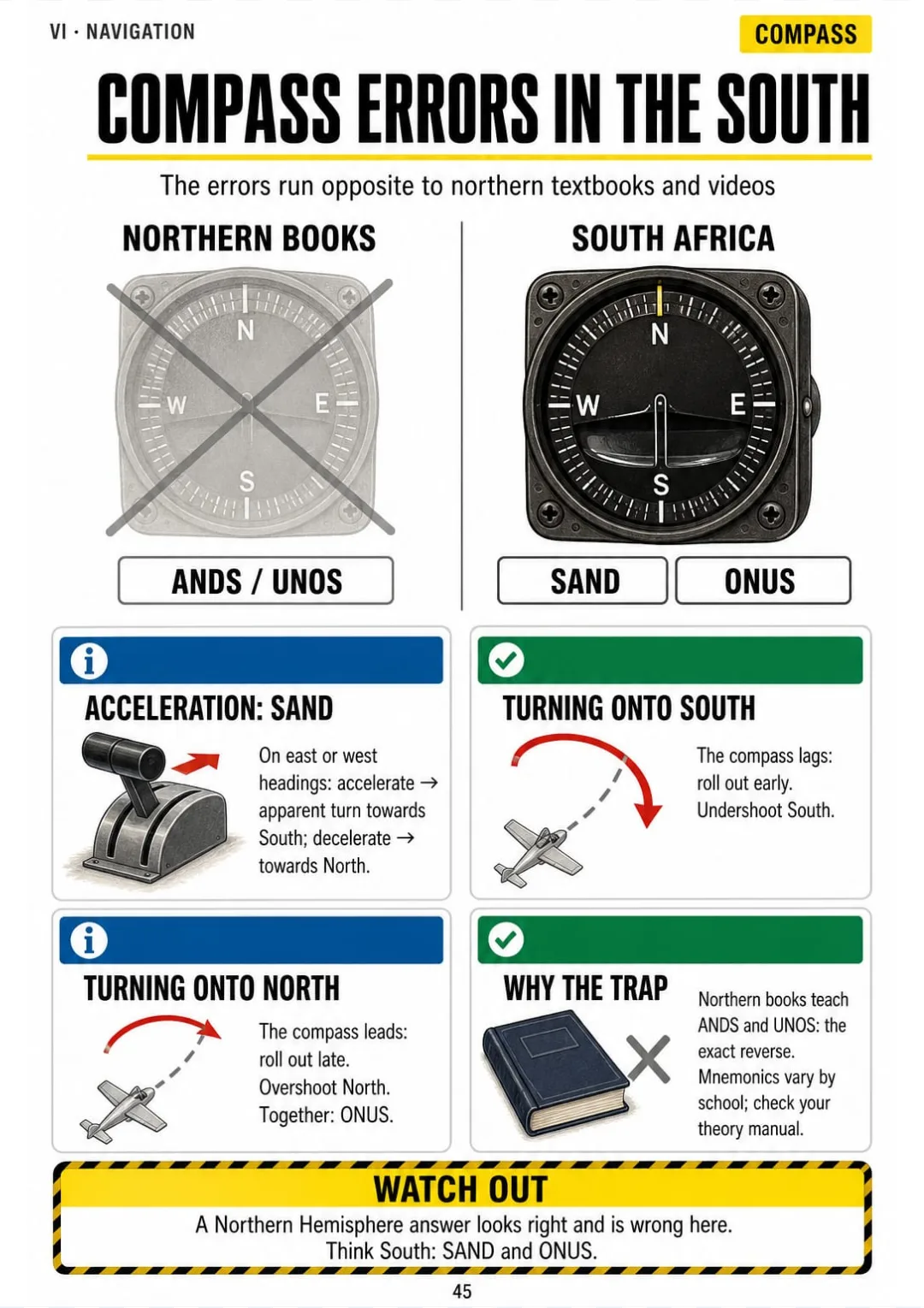
Accelerate east or west → turns South; undershoot South, overshoot North.
Squawk 2000 with no code assigned; in a CTR or ATZ, 5 km and 600 m/500 ft from cloud; SAST = UTC + 2.
Seven theory papers, a 75 % pass mark each, and one tick box per subject.

Swipe to see more →

These are real pages from the book. The table of contents is the full one: 9 parts and 62 topics.

The Problem Isn't You. It's How It Was Explained to You.

Power back for the descent on a humid Highveld morning, about 18 °C, and your instructor asks: carb heat or not? You know you've read this. Nothing comes.

The manual covered it in three dense paragraphs: venturi, fuel evaporation, latent heat, relative humidity. Plenty of words, and no picture of when it actually happens.

Carb icing: expect it from about −10 °C to +30 °C with high humidity, worst at low power.

In PPL Theory Illustrated, carburettor icing is one page: the carburettor cut open, ice forming at the throttle valve, and a band showing the danger range from about −10 °C to +30 °C, worst with high humidity and low power.

Every other topic works the same way: the stall and the load factor, density altitude on the Highveld, mass and balance, compass errors in the south and the METAR, each on its own page.

So the next time you bring the power back on a humid morning, you picture the page, you understand why and you decide without going back to the manual.

COMPARE FOR YOURSELF

The Same Topic, Two Ways to Study It

THIS
  • The manual: line after line
  • Stall speed and load factor explained in words only
  • You walk into the theory exam with doubts
The stall occurs when the critical angle of attack is exceeded, irrespective of airspeed, attitude or power setting. In a level, coordinated turn the lift vector is inclined through the angle of bank, so total lift must increase in order that its vertical component continues to equal weight. The ratio of lift to weight is termed the load factor, n, equal to the reciprocal of the cosine of the bank angle. As stall speed varies with the square root of n, the stall speed in the turn is the wings-level value multiplied by √n.
FOR THIS
  • The stall and the load factor in one drawing
  • The numbers in one box: 60° bank, n = 2, about +41 %
  • You see it and you understand it
Within about one wingspan of the runway, induced drag drops and the aircraft floats
CONTENTS

Take a Look at the 9 Parts and 62 Topics

Air Law, Principles of Flight, Aircraft Technical, Performance, Meteorology, Navigation, Radio, Human Performance and an exam review: 66 pages, all illustrated

ILicence and Air Law · pp. 5-12
  1. Your road to the PPL, drawn as one route
  2. Who runs what: CARs, CATS, AIP and NOTAMs
  3. Licence privileges and recency
  4. Documents on board, in one picture
  5. Airspace in South Africa, as a slice of cake
  6. FAP, FAR, FAD: the three zones that catch students
  7. VMC minima: the bubble around your aircraft
  8. Right of way and the semicircular rule
IIPrinciples of Flight · pp. 13-19
  1. The four forces, balanced
  2. Lift: angle of attack, not attitude
  3. Drag: the U-shaped curve
  4. The stall and the load factor
  5. Flaps, slats and ground effect
  6. Stability on three axes
  7. Spins and spiral dives: two different emergencies
IIIAircraft Technical · pp. 20-27
  1. The four-stroke engine in four frames
  2. Dual magnetos and the mag check
  3. Carburettor icing: the danger range
  4. Mixture and leaning on the Highveld
  5. Fuel system: tank to cylinder
  6. Electrical system and the ammeter
  7. Pitot-static instruments and blockages
  8. Gyro instruments and ASI colour arcs
IVPerformance, Mass and Balance · pp. 28-33
  1. ISA: the standard day in four numbers
  2. Pressure altitude and density altitude
  3. Take-off and landing distance factors
  4. Crosswind and headwind components
  5. Mass and balance: moment = mass × arm
  6. Is the CG in the envelope?
VMeteorology · pp. 34-42
  1. Pressure, QNH and QFE
  2. Wind in the Southern Hemisphere
  3. Stability and the lapse rates
  4. Clouds in three heights
  5. Fog: radiation, advection and the coast
  6. Thunderstorms on the Highveld
  7. Fronts and South African weather systems
  8. Reading a METAR, block by block
  9. Reading a TAF without mixing up times
VINavigation and Flight Planning · pp. 43-51
  1. Latitude, longitude and the chart
  2. True, magnetic, compass: in one line
  3. Compass errors in the Southern Hemisphere
  4. Speed, distance and time
  5. The wind triangle, step by step
  6. The 1 in 60 rule
  7. Fuel planning in litres
  8. Filling in the flight log
  9. Getting lost and finding yourself
VIIRadio Aids and Radiotelephony · pp. 52-57
  1. The phonetic alphabet and numbers
  2. Structure of a radio call
  3. Readbacks: what you must say back
  4. Transponder codes and emergencies
  5. VOR: radials and the CDI
  6. NDB/ADF and GNSS
VIIIHuman Performance · pp. 58-62
  1. IMSAFE before every flight
  2. Hypoxia and altitude
  3. Spatial disorientation
  4. Seeing and being seen
  5. Decisions under pressure
IXExam Review · pp. 63-66
  1. The formulas page
  2. Southern Hemisphere traps
  3. Numbers to have at hand
  4. The subject-by-subject checklist

One Page, One Topic, All Clear

Think of it this way:

It's Saturday morning, 30 °C at a Highveld airfield, and before you start up your instructor asks: what's the density altitude today?

You open the book at that page and see it drawn: field elevation, QNH and temperature stacked like a ladder, four steps from 5 558 ft to about 8 950 ft.

Two dots on the envelope: take-off and landing fuel. Burning fuel can push the CG out.

The same goes for the stall and the load factor, compass errors in the south, the METAR, the wind triangle and fuel in litres: each one on its own page.

PPL Theory Illustrated is 9 parts and 62 topics, all drawn, with an exam review at the end: the formulas page, the Southern Hemisphere traps and the numbers to have at hand.

What you see drawn, you don't have to memorize.

What's Inside PPL Theory Illustrated:

Ipp. 5-12

Licence and Air Law

The road to the PPL, CARs, CATS, AIP and NOTAMs, licence privileges, documents on board, South African airspace, FAP, FAR and FAD zones, VMC minima and right of way.

IIpp. 13-19

Principles of Flight

The four forces, lift and angle of attack, the drag curve, the stall and the load factor, flaps and ground effect, stability, spins and spiral dives.

IIIpp. 20-27

Aircraft Technical

The four-stroke engine, magnetos and the mag check, carburettor icing, leaning on the Highveld, fuel and electrical systems, pitot-static and gyro instruments.

IVpp. 28-33

Performance, Mass and Balance

Answer the performance questions with the working shown: ISA, pressure and density altitude, take-off and landing distances, crosswind components, moment = mass × arm and the CG envelope.

Vpp. 34-42

Meteorology

Read a METAR and TAF block by block and see whether the day works: QNH and QFE, wind in the Southern Hemisphere, stability, clouds, fog, Highveld thunderstorms and fronts.

VIpp. 43-51

Navigation and Flight Planning

The chart, true, magnetic and compass headings, compass errors in the south, speed, distance and time, the wind triangle, 1 in 60, fuel in litres and the flight log.

VIIpp. 52-57

Radio Aids and Radiotelephony

The phonetic alphabet, the structure of a call, readbacks, transponder codes, the VOR, NDB/ADF and GNSS.

VIIIpp. 58-62

Human Performance

IMSAFE, hypoxia, spatial disorientation, seeing and being seen, and decisions under pressure.

IXpp. 63-66

Exam Review

The formulas page, the Southern Hemisphere traps, the numbers to have at hand and a subject-by-subject checklist.

At the end of the book: An exam review with the formulas page, the Southern Hemisphere traps, the numbers to have at hand and a subject-by-subject checklist.
Plus: 2 Free Books

PPL Exam-Style Questions: Subject by Subject

BONUS 1: «PPL Exam-Style Questions: Subject by Subject»

Value on its own: US$ 17.90

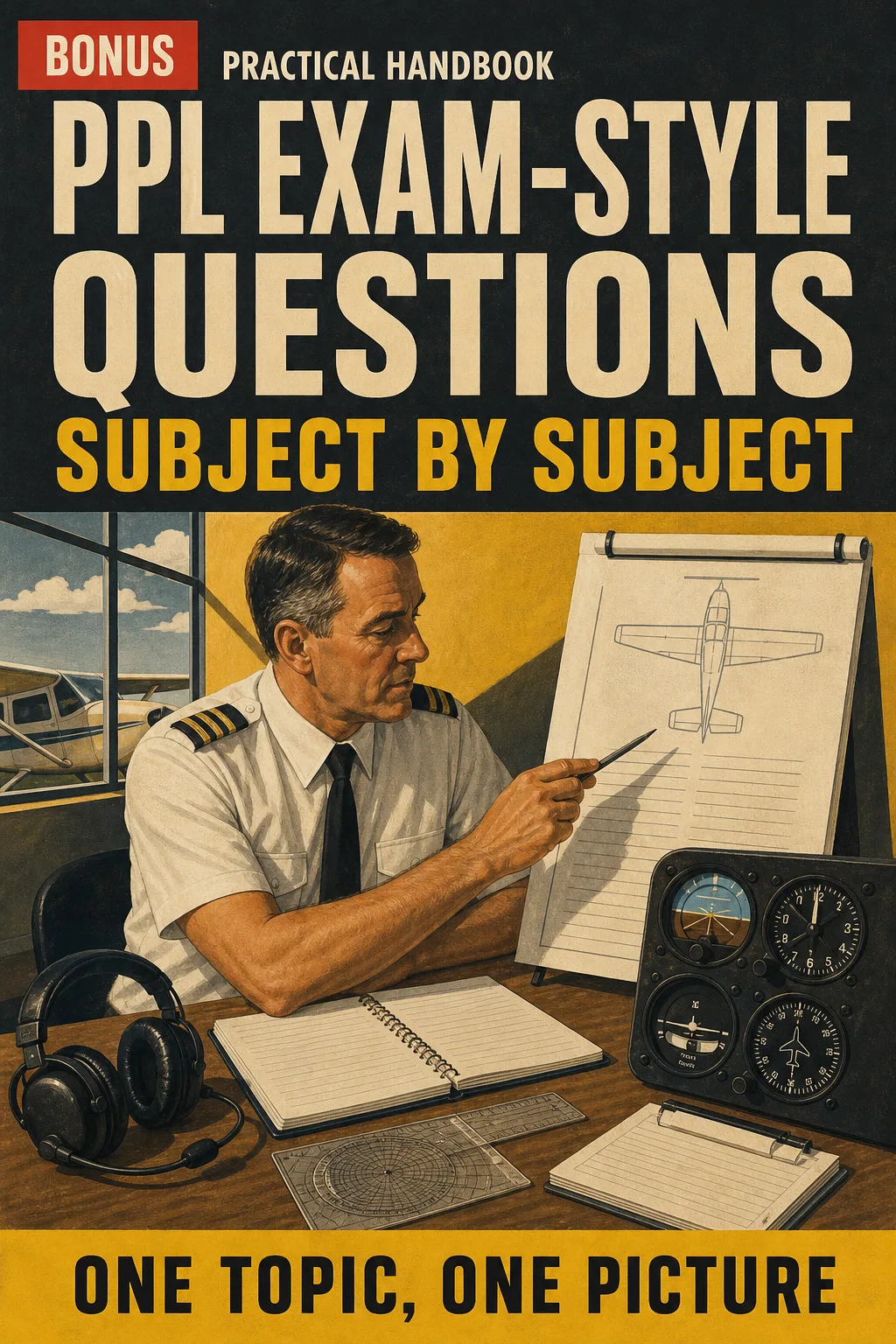
Test yourself on every theory subject with exam-style questions, each answer explained so you know exactly why it is right.

The 15 Most Common PPL Theory Mistakes

BONUS 2: «The 15 Most Common PPL Theory Mistakes»

Value on its own: US$ 14.90

See the slips student pilots make most often, from variation and deviation to TAF times, drawn before and after so you stop repeating them.

PPL Theory Illustrated with 2 Free Books

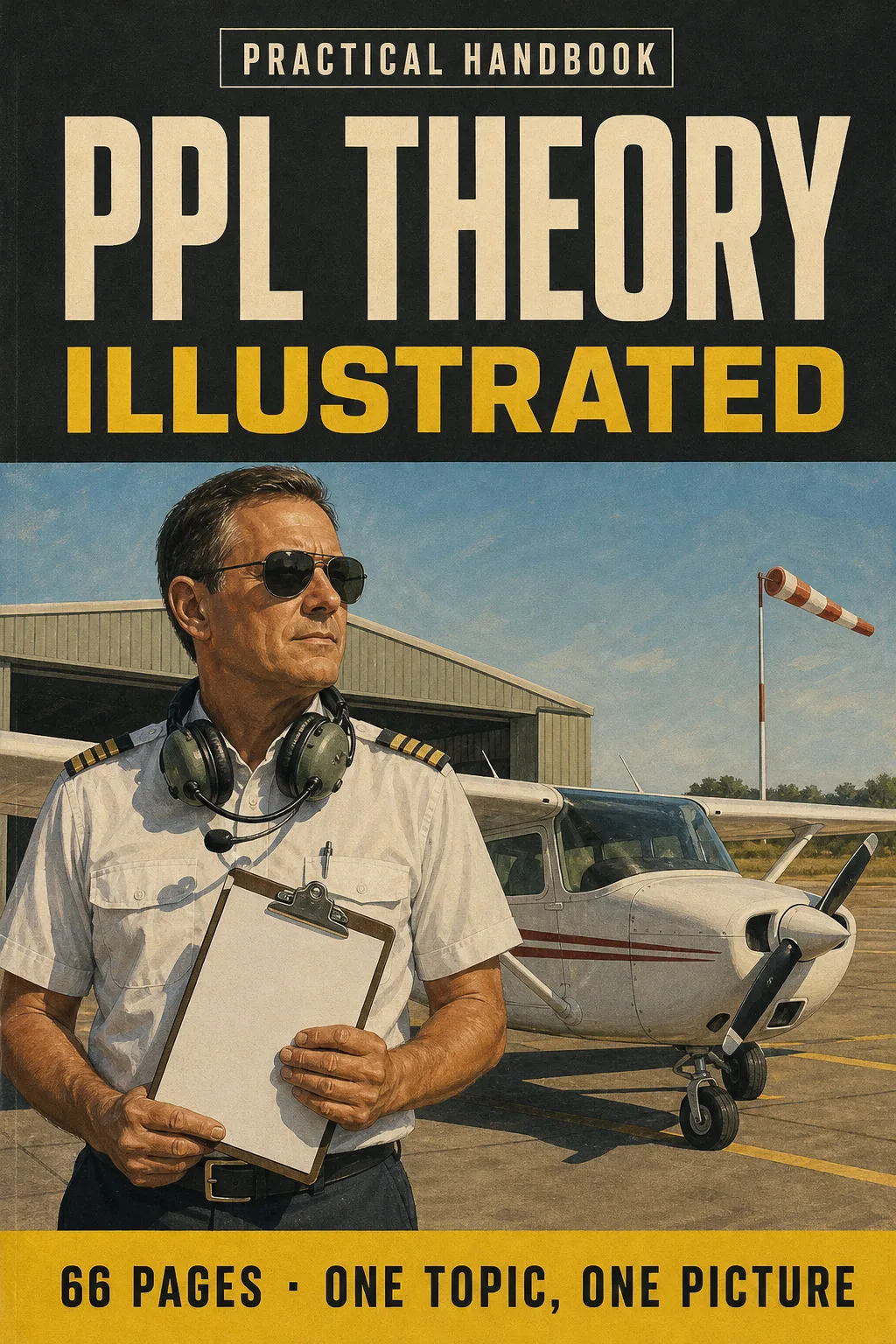
  • PPL Theory Illustrated: 66 illustrated pagesUS$ 63
  • BONUS 1: PPL Exam-Style Questions: Subject by SubjectUS$ 17.90
  • BONUS 2: The 15 Most Common PPL Theory MistakesUS$ 14.90
  • High-resolution PDF to printIncluded
Total value US$ 95.80
YOUR PRICE:
US$ 27
You save US$ 68.80
YES, I WANT PPL THEORY ILLUSTRATED FOR US$ 27

📄 This is a digital PDF book sent to your email: nothing is printed or shipped.

Secure purchaseEncrypted payment30-day guarantee

PDF by email: We email you PPL Theory Illustrated as a PDF, together with the two free books. It's a single payment: no installments, no extra charges.

Who This Book Is For

You're doing ground school

You're doing ground school

One topic per evening, one page each: you study in the same order as the syllabus and the next lesson builds on the last.

Your theory exams are close

Your theory exams are close

The exam review pulls the formulas, the numbers and the Southern Hemisphere traps onto a few pages you can go through the night before.

You hold a PPL and are coming back

You hold a PPL and are coming back

Airspace, radio calls, the wind triangle and mass and balance back in order before your flight with an instructor.

Everything You Get Today

US$ 95.80US$ 27
YES, I WANT PPL THEORY ILLUSTRATED FOR US$ 27

📄 This is a digital PDF book sent to your email: nothing is printed or shipped.

30DAYS
GUARANTEE

30-Day Guarantee

Try PPL Theory Illustrated for 30 days, bonus books included.

We refund everything if the file won't open, if the book isn't what you see here, if you were charged twice or if the email doesn't arrive. Just email us.

You pay once. No subscriptions.

Frequently Asked Questions

Is it for me if I'm learning to fly around work and family, and study at night?

Yes. One topic per page, so one page fits in an evening. Calculations use kg, litres, km and knots (altitudes in feet, as in South African aviation), and the rules follow South Africa, not the FAA. It also works if you hold a PPL and are coming back.

Where does the content come from, and is it up to date?

The South African Civil Aviation Regulations (Part 61 and Part 91), the South African AIP and the SACAA PPL theory syllabus, with ICAO Annexes for the shared material. Regulations, frequencies and AIP figures change with each amendment: the book explains how each rule works and why, and for anything you use in the air, always check the current AIP, NOTAMs and your school's documents.

Is it official material?

No. It's an independent study book. It isn't published, approved or endorsed by the SACAA or by any flight school.

Does it replace ground school or flight training?

No. It's a study aid alongside your ground school, the books your school asks for, your instructor and your aircraft's POH/AFM: it shows each topic drawn so the rest makes sense faster. Charts and examples are for study only, not for real navigation.

Are the practice questions the ones from the exam?

No. The questions in “PPL Exam-Style Questions: Subject by Subject” are written for this book. They follow the style of the theory exams, but they aren't official exam questions.

When and how do I get it?

As a PDF by email, to the address you enter at checkout.

Do I have to pay every month?

No. It's a one-off payment.

Can I have it on paper?

Yes. It's a PDF you can print at home or at a print shop, the whole book or just the pages you want in your flight bag.

How does the refund work?

You have 30 days. We refund everything if the file won't open, if the book isn't what you see on this page, if you were charged twice or if the email doesn't arrive: just email us.

Before You Close This Page

No more rereading with nothing sticking.

The stall, carb icing and the wind triangle: you see them drawn, and they make sense.

You walk into your theory exams knowing where everything is.

Drawings make studying faster.

The book is right below.

One-time payment: US$ 27 · Guarantee: 30 days · PDF by email

YES, I WANT PPL THEORY ILLUSTRATED FOR US$ 27

📄 This is a digital PDF book sent to your email: nothing is printed or shipped.